by Vincent Juico
In a profession often dominated by loud personalities and oversized egos, Rick Adelman built a Hall of Fame coaching career by doing something remarkably uncommon: he trusted the game.
For more than two decades on the NBA sidelines, Adelman became one of basketball’s most respected minds, not because he sought the spotlight, but because his teams consistently reflected his intelligence, creativity, and belief in teamwork. While many coaches were known for rigid systems and authoritarian styles, Adelman preferred flow over force, movement over isolation, and collaboration over control.

His influence on modern basketball remains greater than many casual fans realize.
Born in Lynwood, California, in 1946, Adelman’s basketball journey began as a player. After starring at Loyola University, he enjoyed a modest professional career that included stops in the NBA and the old ABA. Although he never became a household name as a player, the experience gave him a deep understanding of the game from the floor-level—a perspective that would later shape his coaching philosophy.
Adelman’s coaching career gained momentum with the Portland Trail Blazers. Taking over during the 1988-89 season, he quickly transformed Portland into one of the NBA’s elite teams. Led by Clyde Drexler, Terry Porter, Jerome Kersey, and Buck Williams, the Blazers became a perennial contender.
Under Adelman, Portland reached the NBA Finals twice, in 1990 and 1992. While Michael Jordan’s Chicago Bulls ultimately denied them a championship, those Trail Blazers teams were among the most complete and entertaining squads of their era. They defended aggressively, pushed the pace, and played with a cohesion that reflected their coach’s vision.
Yet perhaps Adelman’s most memorable work came in Sacramento.
When he arrived to coach the Kings in 1998, the franchise had long been associated with losing seasons and empty expectations. What followed was one of the most remarkable transformations in NBA history.
Adelman helped orchestrate a basketball renaissance in California’s capital city. The Kings became must-watch television, featuring dazzling ball movement, selfless offense, and an international flavor that was ahead of its time. Players like Chris Webber, Vlade Divac, Peja Stojaković, Mike Bibby, and Doug Christie thrived in a system that emphasized passing, spacing, and decision-making.
Many observers now view those Sacramento teams as prototypes for the style of basketball that would later define the NBA.
The 2001-02 Kings remain one of the greatest teams never to win a championship. Sacramento finished with 61 victories and appeared poised to capture the franchise’s first NBA title before a dramatic Western Conference Finals loss to the Los Angeles Lakers. More than two decades later, debates about that series continue, but what remains undisputed is the quality of Adelman’s team.
Those Kings played basketball as art.
Adelman later brought his philosophy to Houston and Minnesota, continuing to earn praise from players and peers alike. His Houston Rockets teams consistently overachieved despite injuries, while his Minnesota Timberwolves clubs helped nurture the development of future stars.
What separated Adelman from many of his contemporaries was his ability to adapt. Rather than forcing players into predetermined roles, he built systems around their strengths. Veterans appreciated the freedom he provided. Young players benefited from the confidence he instilled.
His coaching record speaks for itself: more than 1,000 regular-season victories, numerous playoff appearances, and induction into the Naismith Memorial Basketball Hall of Fame in 2021. Yet statistics tell only part of the story.
Adelman’s true legacy lies in the way he influenced how basketball is played.
Long before pace-and-space became fashionable, Adelman emphasized ball movement and player empowerment. Long before positionless basketball became a buzzword, his offenses featured versatile big men passing from the high post and guards cutting without the ball. Many of today’s offensive principles can trace at least part of their lineage to concepts Adelman championed years earlier.
In a league that often celebrates championships above all else, Rick Adelman’s career offers a different lesson. Greatness is not always measured solely by rings. Sometimes it is measured by respect earned, innovations introduced, and the lasting impact left on the sport.
Rick Adelman never won an NBA championship as a head coach.
But generations of players, coaches, and fans understand that his place among basketball’s elite was secured long ago.
He taught the game to move, to share, and to trust itself.
And in doing so, he left basketball better than he found it.

As if silencing doubters, Steph Curry erupted for a career-high 62 points as the Golden State Warriors beat the Portland Read more
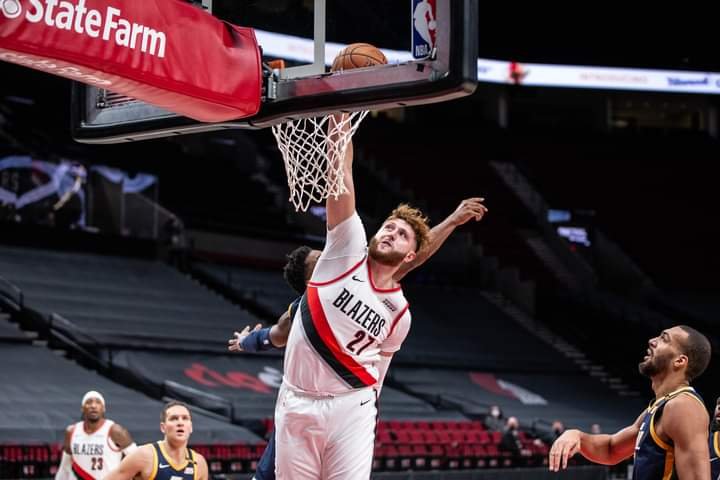
Portland Trail Blazers center Jusuf Nurkic will be out indefinitely after suffering a broken wrist injury Thursday in their game Read more

"Marvelous" Marvin Nathaniel Hagler had knockout power in both hands. He could fight either southpaw or unorthodox, anything to keep Read more
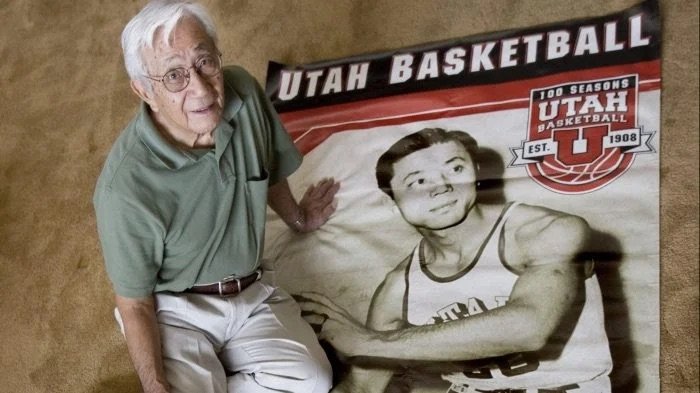
Wataru Misaka was 5-foot-7 and was drafted by the New York Knicks of the then BAA (Basketball Association of America), Read more

- MVP MMA Takes Aim - August 13, 2026
- The Heart of Resilience - July 27, 2026
- The Tartan Army and the Orange Army: What American Sports Can Learn from Football’s Greatest Traveling Fans - June 26, 2026