by Vincent Juico
Mike Tyson is one of the most fascinating and controversial figures in boxing history. His life is a story of extraordinary talent, devastating power, personal struggles, mistakes, and the difficult process of rebuilding oneself. He became famous for his frightening punching power and aggressive fighting style, but his career also demonstrated that success in sports requires more than physical ability. Discipline, emotional control, sound decisions, and the right support system are equally important.
Tyson’s journey from a troubled childhood to becoming the youngest heavyweight champion in boxing history is a powerful example of how talent can change a person’s life and how personal problems can threaten even the most promising career.
Mike Tyson was born on June 30, 1966, in Brooklyn, New York. He grew up in a difficult environment marked by poverty, insecurity, and trouble with the law. During his childhood, he frequently became involved in fights and experienced problems with discipline. His early experiences helped shape his aggressive personality, although they did not determine everything he would eventually become.

Boxing became a turning point when Tyson met trainer and mentor Cus D’Amato. D’Amato recognized his natural strength, speed, and potential, but he also understood that Tyson needed structure and guidance. Through training, discipline, and the development of defensive skills, Tyson began transforming his aggression into a competitive advantage.
This stage of his life illustrates an important lesson in sports: raw talent is rarely enough. A gifted athlete needs someone who can develop that talent, correct weaknesses, and establish the habits necessary for long-term success.
D’Amato played a particularly important role because he offered Tyson more than technical boxing instruction. He provided guidance, confidence, and a sense of direction. Tyson’s early success was therefore not simply the result of physical strength. It also came from a structured training environment that helped him channel his abilities toward a clear goal.
Tyson’s professional career began in 1985, and he quickly established himself as one of boxing’s most dangerous young fighters. He possessed exceptional hand speed, explosive punching power, and the ability to attack opponents with little warning.
Unlike many heavyweight boxers who relied on height and reach, Tyson often moved inside his opponents’ defenses, using head movement, compact punches, and combinations to create openings.
His breakthrough came on November 22, 1986, when he defeated Trevor Berbick by technical knockout to win the World Boxing Council heavyweight championship.
At just 20 years old, Tyson became the youngest heavyweight world champion in history, a record he still holds. He later collected the WBA and IBF titles, becoming the first heavyweight to hold all three major belts simultaneously.
What made Tyson special was the way he combined speed and power with intelligent positioning. He did not simply swing wildly at his opponents. At his best, he used defensive movement to avoid punches, closed the distance quickly, and attacked the body and head in rapid succession.
His style placed opponents under tremendous psychological pressure. Many fighters appeared uncomfortable before the opening bell because they knew that one mistake could change the entire contest.
Tyson’s early success also changed the public’s perception of heavyweight boxing. He attracted audiences who wanted excitement, dramatic knockouts, and a fighter whose presence alone could generate attention. His performances helped turn him into a global sporting celebrity.
However, his dominance also created a challenge. When an athlete becomes accustomed to winning, maintaining motivation and humility can become increasingly difficult. Tyson’s early victories established his reputation, but they also raised expectations that would follow him throughout his career.
One of the most important factors in Tyson’s early success was the relationship he had with Cus D’Amato. D’Amato helped develop his boxing technique and mental approach, teaching him to combine aggression with calculated movement.
After D’Amato died in 1985, Tyson lost a major source of guidance. Although he continued winning championships, the stability and discipline associated with his early development became harder to maintain.
This does not mean that Tyson’s later difficulties can be explained by one event alone. His career involved numerous personal, professional, and organizational factors. Nevertheless, the loss of an important mentor highlights how an athlete’s support system can influence performance beyond the training gym.
A champion needs more than a coach who understands technique. Athletes also benefit from people who can challenge their decisions, protect their long-term interests, and help them handle the pressures of fame and wealth.
Tyson’s story demonstrates why a strong support network matters, especially when success arrives at a young age. Fame can bring money and opportunities, but it can also expose athletes to poor advice, unhealthy relationships, and decisions that carry lasting consequences.
On February 11, 1990, Tyson suffered one of the biggest upsets in boxing history when he lost to James “Buster” Douglas in Tokyo, Japan.
Tyson entered the contest as the overwhelming favorite. Douglas, however, fought with confidence, maintained his distance when necessary, and used his jab and combinations effectively. Although Tyson knocked Douglas down during the eighth round, Douglas recovered and eventually stopped Tyson in the tenth.
The defeat revealed weaknesses that had become difficult to ignore. Tyson was no longer the seemingly unstoppable fighter who had overwhelmed opponents during his early championship years. His preparation, concentration, and ability to respond when a fight became difficult were now under serious scrutiny.
The Douglas fight also demonstrated a fundamental truth about competitive sports that reputation cannot win a contest on its own.
An athlete may have extraordinary ability and an impressive record, but every opponent has an opportunity to expose weaknesses. Preparation, strategy, conditioning, and mental resilience remain essential regardless of how famous a champion becomes.
For Tyson, the loss was a turning point. It ended the image of invincibility that had surrounded him and forced the boxing world to reconsider his place among the sport’s dominant figures.
Tyson’s career cannot be understood solely through his victories and defeats. His personal life became increasingly troubled, with legal problems, unstable relationships, and decisions that damaged his public reputation.
In 1992, he was convicted of rape and sentenced to prison. He served approximately three years before returning to boxing. Tyson has denied the allegation, but the conviction remains an important and serious part of his history.
His return to the ring demonstrated that he still possessed considerable physical ability. However, his personal circumstances had changed, and his career was no longer defined by sporting performance alone.
Another notorious moment occurred in 1997, during his rematch with Evander Holyfield. Tyson was disqualified after biting Holyfield’s ears during the fight. The incident shocked the sporting world and reinforced concerns about his emotional control and conduct.
From a sporting perspective, the episode was especially damaging because discipline is fundamental to boxing. The sport allows controlled aggression within strict rules. When a competitor loses control, the consequences can include disqualification, financial penalties, suspension, and lasting reputational damage.
Tyson’s experiences show how an athlete’s behavior outside and inside competition can affect a career. Physical talent may create opportunities, but it cannot eliminate responsibility for one’s actions.
It is also important to recognize that discussing Tyson’s difficult past does not require reducing his entire life to his mistakes. A fair assessment should acknowledge his sporting achievements while taking his legal history and controversial conduct seriously.
The Struggle To Rebuild a Career
Tyson returned to boxing after prison and regained world heavyweight titles in the 1990s. His victories over Frank Bruno and Bruce Seldon demonstrated that he remained capable of performing at championship level.
However, he was no longer the same fighter who had dominated the division in his early twenties. His opponents had studied his style, and his performances were less consistently dominant. He still possessed formidable punching power, but his career increasingly involved difficult contests, setbacks, and questions about his long-term future.
His 1996 defeat to Holyfield was particularly significant because it showed that determination and physical strength could not guarantee victory against a well-prepared opponent. Holyfield combined courage, tactical discipline, and intelligent combinations to defeat Tyson.
Tyson’s later career included further losses and financial difficulties. He eventually retired from professional boxing in 2005 after losing to Kevin McBride.
His retirement marked the end of a career that had produced remarkable achievements but had also been affected by serious personal and professional problems.
The lesson is not that Tyson lacked talent. On the contrary, his natural ability was exceptional. The deeper issue is that maintaining success over many years requires consistency, adaptability, emotional stability, and the willingness to learn from setbacks.
Life Beyond the Boxing Ring
Tyson’s influence did not disappear when his professional career ended. He became involved in entertainment, public appearances, interviews, business ventures, and projects that allowed him to reach audiences beyond boxing.
His willingness to discuss his difficult experiences has also contributed to public interest in his life. Rather than being remembered exclusively as a champion or a controversial figure, Tyson has increasingly been viewed as a complicated individual whose experiences include both achievement and failure.
In November 2024, at age 58, he returned to the ring for a professional bout against Jake Paul. Tyson lost by unanimous decision over eight rounds. The contest attracted enormous public attention, demonstrating that his name still carried commercial power decades after his championship peak.
From a competitive standpoint, the fight also highlighted the difference between historical greatness and present-day performance. Tyson’s reputation was built on what he accomplished during his prime, but age inevitably changes an athlete’s speed, endurance, recovery, and ability to withstand punishment.
His later appearances should therefore be viewed in the context of his age and the different circumstances surrounding modern boxing events, rather than treated as a direct measure of his achievements in the 1980s.
Tyson has also turned toward supporting younger boxers. In 2026, he continued developing the Mike Tyson Invitational, an amateur boxing event intended to give emerging fighters opportunities to gain experience and exposure.
This development provides another dimension to his legacy. An athlete who once benefited from mentorship can use his experience to help others navigate the challenges of competitive sport.
Mike Tyson’s life offers several important lessons for athletes, coaches, and sports fans.
First, talent must be supported by discipline. Tyson’s speed, power, and natural instincts made him extraordinary, but sustaining success required more than those qualities.
Second, a strong support system matters. Coaches, mentors, family members, and trusted advisers can help athletes make decisions that protect their careers and personal lives.
Third, success does not remove personal responsibility. Tyson’s achievements cannot excuse his misconduct, just as his controversies should not erase his legitimate sporting accomplishments.
The loss to Buster Douglas showed that confidence and reputation are not substitutes for preparation and adaptability.
Finally, a person’s legacy can evolve. Tyson’s history includes remarkable championships, serious mistakes, public criticism, and efforts to pursue new opportunities. His story demonstrates that an athlete’s life is more complicated than a win-loss record.
Mike Tyson remains one of the most recognizable names in boxing because his career combined extraordinary athletic achievement with dramatic personal struggles. His rise to heavyweight supremacy changed the sport’s public image, and his aggressive style made him one of the most feared competitors of his generation.
Yet his life also reveals the limitations of fame and physical talent. His defeat to Buster Douglas, his legal conviction, his disqualification against Holyfield, and his eventual retirement illustrate the consequences that can follow when personal difficulties and professional pressures become difficult to manage.
Tyson should neither be celebrated without criticism nor judged exclusively by his worst moments. His sporting achievements deserve recognition, while his serious mistakes must remain part of an honest assessment.
Ultimately, his legacy extends beyond the punches he landed or the championships he won. It raises a larger question about what it means to succeed in sports. Is greatness measured only by victories, or does it also depend on character, responsibility, and the ability to learn from failure?
Tyson’s life suggests that winning a championship can make someone famous, but sustaining a meaningful legacy requires much more.

"Marvelous" Marvin Nathaniel Hagler had knockout power in both hands. He could fight either southpaw or unorthodox, anything to keep Read more
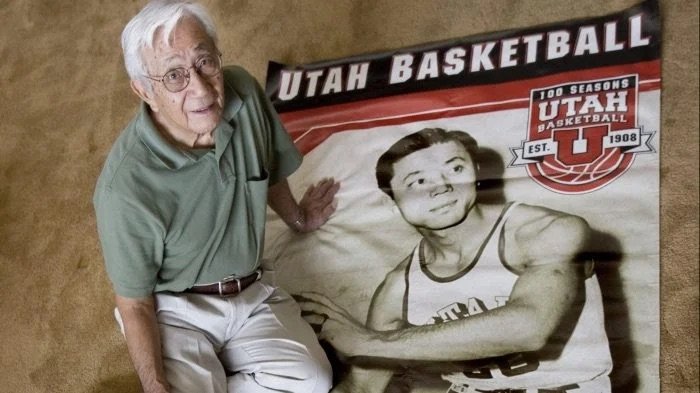
Wataru Misaka was 5-foot-7 and was drafted by the New York Knicks of the then BAA (Basketball Association of America), Read more

BaliPure Purest Water Defenders Head Coach Rommel Abella mentioned the word positionless, which is a word you normally associate with Read more
![Stephen Curry [photo credit: Wikimedia Commons | TechCrunch]](https://sportsbytes.com.ph/wp-content/uploads/2021/04/TechCrunch_Disrupt_San_Francisco_2019_-_Day_1_48835097887_cropped-scaled.jpg)
As the nation observes holy week, in my 45 years of existence, I've seen athletes both professional and amateur, wear Read more

- Power, Pride, Pain, Redemption - October 13, 2026
- MVP MMA Takes Aim - August 13, 2026
- The Heart of Resilience - July 27, 2026