by Vincent Juico
For years, the UFC has enjoyed something close to a monopoly on the MMA conversation.
That may be about to change.
The merger between Most Valuable Promotions and the Professional Fighters League is one of the more intriguing developments in combat sports in recent years. On paper, it brings together two very different strengths: the PFL has the fighters, infrastructure and experience of an established MMA promotion, while MVP has something the PFL has desperately lacked — cultural relevance.
Put simply, the PFL has been trying to convince people to watch.
Jake Paul has already figured out how to make people pay attention.
That distinction may be the most important part of this entire deal.

MVP MMA is not entering the market pretending it can knock the UFC off its perch overnight. Even Nakisa Bidarian, one of the architects of the merger, acknowledges that. But the ambition is unmistakable. The stated goal is to become the Pepsi to the UFC’s Coke, potentially within 12 to 24 months.
That is an enormous challenge.
But for perhaps the first time, there is a credible argument that the UFC could face a genuine competitor capable of generating attention beyond the traditional MMA audience.
The PFL’s problem has never necessarily been a lack of talent. It has had some outstanding fighters and has made significant investments, including its acquisition of Bellator. Yet the organization has struggled to turn that talent into a cultural movement.
MVP has done the opposite.
Jake Paul has mastered the art of creating an event around a fight. Whether fans love him, dislike him or simply want to see what happens next, they talk about him. That is an incredibly valuable commodity in modern sports.
The challenge now is transferring that attention to MMA.
And this is where Dakota Ditcheva becomes particularly interesting.
Ditcheva has the talent and personality to become one of the faces of the new organization. Bidarian’s comments about wanting to make her a household name are significant because they reveal what MVP MMA appears determined to do differently.
It isn’t enough to have good fighters.
They have to become stars.
The UFC has spent decades building fighters into recognizable personalities. Conor McGregor, Ronda Rousey, Jon Jones and many others became bigger than the organization itself. MVP understands that lesson, perhaps better than almost anyone in combat sports.
The merger also creates another intriguing possibility: fighters crossing between boxing and MMA.
Imagine a promotion where a boxer can move into MMA, an MMA fighter can box, and the promotional machine behind both sports is working from the same playbook.
That could create matchups and storylines that traditional MMA promotions simply cannot replicate.
But there is a danger here, too.
MVP cannot become so obsessed with the Jake Paul phenomenon that every fighter is presented as another version of Jake Paul. The novelty of celebrity boxing works because it is unusual. If everything becomes spectacle, the actual sport can eventually get lost.
The PFL’s existing championship structure and roster therefore matter.
So does credibility.
The organization has to convince serious MMA fans that its champions are genuinely among the best fighters in the world, rather than simply the best fighters under the MVP MMA banner. Bidarian’s comments about Usman Nurmagomedov are revealing. The new promotion knows it has to sell not just fighters, but the belief that these fighters belong in the pound-for-pound conversation.
That is a much harder sell.
The UFC has an enormous head start in that department.
It has the history, the rankings, the champions, the global audience and, perhaps most importantly, the perception that if you want to know who the best MMA fighters in the world are, you start with the UFC.
MVP MMA’s biggest job will be attacking that perception.
The broadcasting situation could be decisive.
The PFL has publicly acknowledged that its relationship with ESPN has not produced the level of promotion and attention the organization wanted. Now, with the merger, MVP MMA is searching for a major U.S. broadcast partner for its planned 2027 launch.
That could be the turning point.
If MVP can secure a major streaming or television platform and combine that distribution with its ability to create viral moments, compelling personalities and crossover stars, the UFC will suddenly have something it has rarely had to worry about: sustained competition for the attention of casual sports fans.
And that is where this merger becomes bigger than the PFL simply changing its name.
This is an attempt to change the economics and culture of MMA promotion.
The UFC remains the clear No. 1. Nothing about this merger changes that today.
But combat sports history is filled with organizations that underestimated the value of promotion, personality and timing.
MVP has already demonstrated that it understands those three things.
The PFL has demonstrated that it understands MMA.
Put those two capabilities together and you have something potentially dangerous.
Whether MVP MMA eventually becomes the Pepsi to the UFC’s Coke is impossible to know.
But for the first time in a long time, the UFC may have a rival that understands the most important rule of modern sports.
Being the best isn’t enough.
You have to make people care.
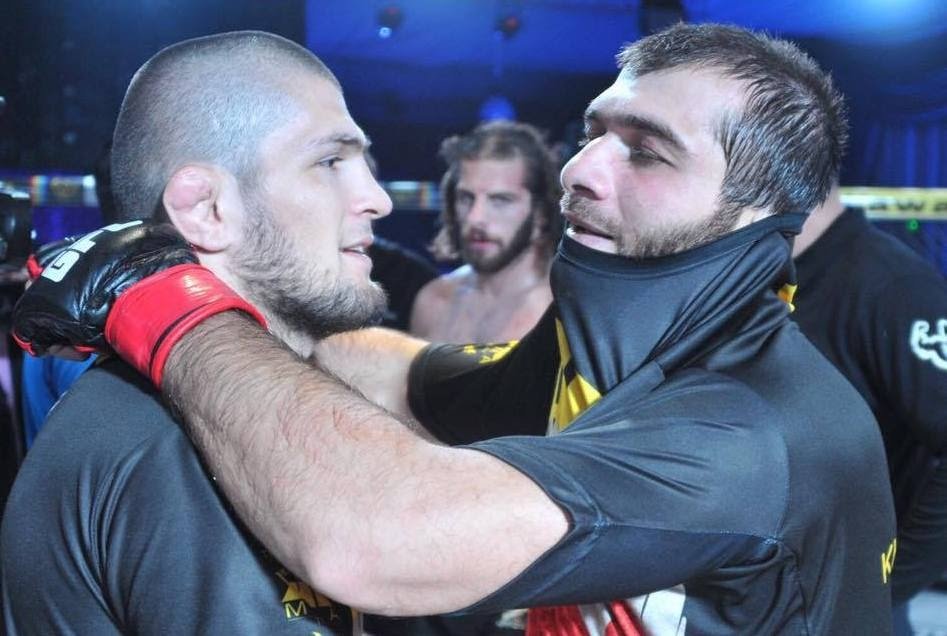
Khabib Nurmagomedov and Eldar Eldarov stood opposite each other inside the cage over 11 years ago when the two were Read more

Brave Combat Federation (Brave CF) is set to return home and stage a series of explosive events in the Kingdom Read more
![Jon Tuck [PFL photo]](https://sportsbytes.com.ph/wp-content/uploads/2021/02/unnamed18.jpg)
The Professional Fighters League (PFL) have added established sports industry executive, Jon Tuck, to the company's executive team. He will Read more
![Mark "Mugen" Streigl [photo: Mark "Mugen" Striegl Instagram]](https://sportsbytes.com.ph/wp-content/uploads/2021/02/Screenshot_143.png)
Mark Striegl reveals he is now healthy and ready to fight again. He will have his second UFC fight in Read more

- MVP MMA Takes Aim - August 13, 2026
- The Heart of Resilience - July 27, 2026
- The Tartan Army and the Orange Army: What American Sports Can Learn from Football’s Greatest Traveling Fans - June 26, 2026