by Vincent Juico
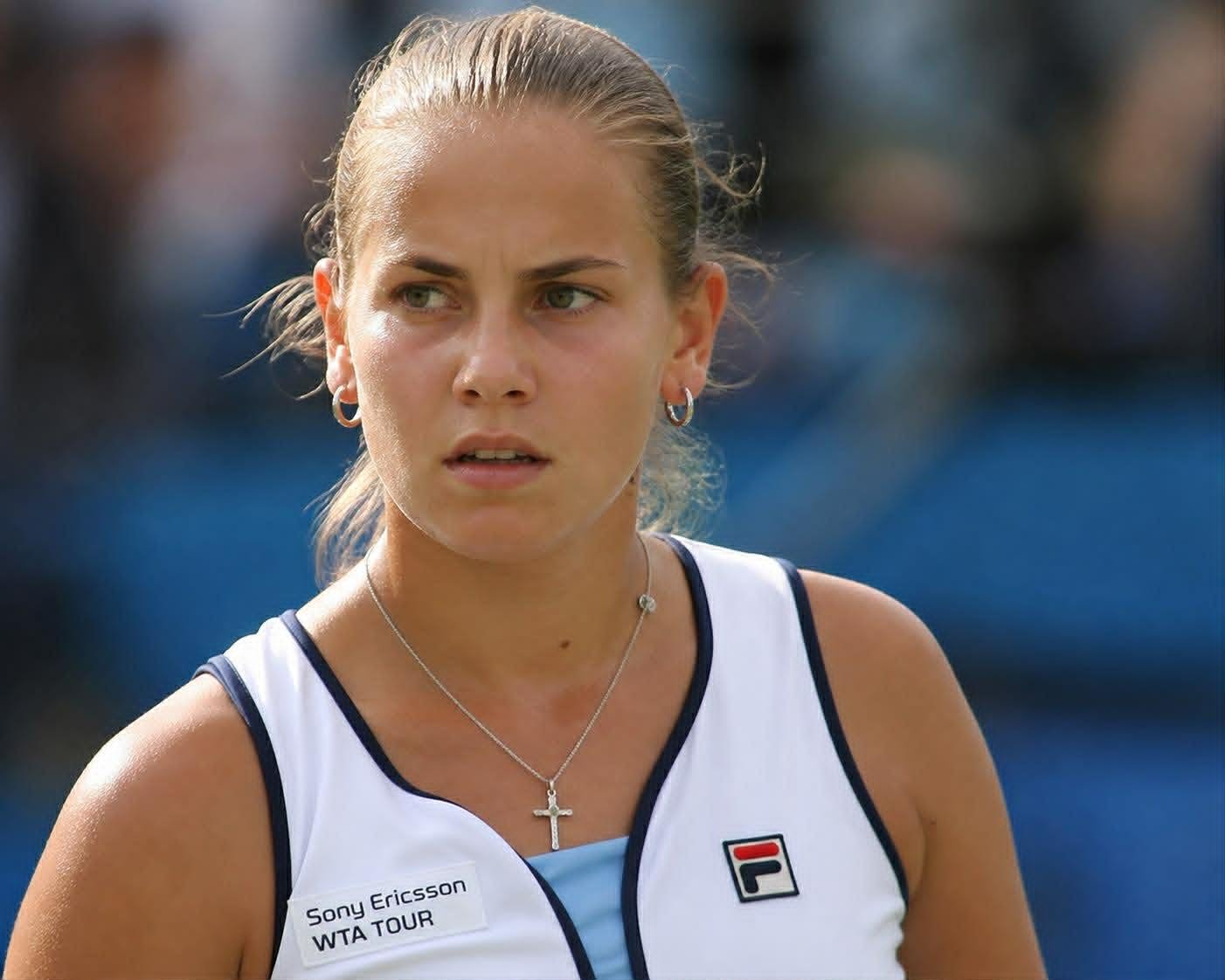
The career of Jelena Dokic cannot be measured purely in rankings, titles, or match statistics. To attempt that would be to miss the essence of a journey that is as much about survival as it is about sport.
On talent alone, Dokic belonged among the elite of women’s tennis in the early 2000s. A powerful baseline player with clean groundstrokes and an aggressive mindset, she announced herself to the world in stunning fashion at Wimbledon in 1999, defeating top seed Martina Hingis as a qualifier in one of the great upsets in tennis history. It wasn’t a fluke; it was a glimpse of what she could become. Within a few years, she rose to world No. 4, competing deep into Grand Slams and establishing herself as a legitimate contender in an era rich with talent.
But Dokic’s story was never confined to the court.
Behind the results was a deeply troubled personal life, dominated by the influence of her father, Damir Dokic. His volatile behavior became a recurring and public shadow over her career, marked by controversy, control, and, as Dokic later revealed, severe abuse. For an athlete, the margins between winning and losing are razor-thin; for Dokic, those margins were compounded by emotional and psychological strain that few competitors could fully comprehend.
And yet, she persisted.
There were moments when her career seemed to fracture completely.
Declines in form, ranking drops, and long absences from the tour followed. Many players, under far less strain, have disappeared quietly in similar circumstances. Dokic’s resilience lay not in uninterrupted success, but in her ability to return. Her comeback, highlighted by a run to the quarterfinals of the Australian Open in 2009, was not just a sporting achievement; it was a personal reclamation. Each match won carried a weight that extended far beyond the scoreboard.
Technically, Dokic’s game was built for her era, with flat, penetrating groundstrokes, an ability to take the ball early, and a willingness to dictate rallies. But what defined her was not just how she played, but what she endured to play at all. The psychological toll of her circumstances inevitably influenced her consistency and longevity, raising the inevitable question of what might have been under different conditions. It is a question without an answer, but one that lingers over her career.
In retirement, Dokic’s impact arguably grew even more significant. By speaking openly about her experiences, she reframed her narrative from one of unfulfilled potential to one of courage and advocacy. In doing so, she gave voice to issues that are often hidden in elite sport: abuse, mental health struggles, and the pressures placed on young athletes. Her story resonates not because it is unique, but because it reveals truths that are too often unspoken.
What makes Jelena Dokic’s career compelling is not the absence of struggle, but its presence. In a sporting culture that tends to celebrate only victory, her journey forces a broader understanding of success. It is not always about titles won or rankings achieved; sometimes, it is about endurance, honesty, and the ability to rebuild.
In that sense, Dokic’s legacy extends beyond tennis. She reminds us that athletes are not just competitors, but people navigating complex lives behind the scenes. Her career may not fit neatly into conventional definitions of greatness, but it offers something more profound: a testament to resilience in its most human form.

Extending its commitment to further help tennis ball boys and trainers nationwide, Pinoy Tennis Trainers (PTT) organized a bicycle donation Read more
![Johnny Arcilla [Johnny Arcilla Facebook]](https://sportsbytes.com.ph/wp-content/uploads/2022/10/12794595_10208764798467661_2635344701562766128_n.jpg)
Top seeds Johnny Arcilla and Jonard Joven lived up to their billing as they smashed Mario and Reymart Sabas, 6-0, Read more
![Bea De Ocampo & Gabby Sandejas [UAAP Media Bureau]](https://sportsbytes.com.ph/wp-content/uploads/2023/03/UAAP-85-Womens-Tennis-ADMU-vs.-NU-Bea-De-Ocampo-Gabby-Sandejas-1.jpg)
National University began its title defense after defeating Ateneo de Manila University 4-1 in the UAAP Season 85 Women's Tennis Read more
![JJ Llavore and Mik Balce of Ateneo [UAAP Media Bureau]](https://sportsbytes.com.ph/wp-content/uploads/2023/03/IMG_1740_UAAP-Season-85-mens-tennis-ADU-vs-Ateneo_JJ-Llavore-and-Mik-Balce-scaled.jpg)
Ateneo de Manila University edged out the erstwhile co-leader University of the East with a 3-2 decision to keep its Read more

- MVP MMA Takes Aim - August 13, 2026
- The Heart of Resilience - July 27, 2026
- The Tartan Army and the Orange Army: What American Sports Can Learn from Football’s Greatest Traveling Fans - June 26, 2026