The Philippines didn’t just host a sambo championship. It proved a point — about its athletes, its organization, and its place in the global combat sports conversation — and the world took notice.
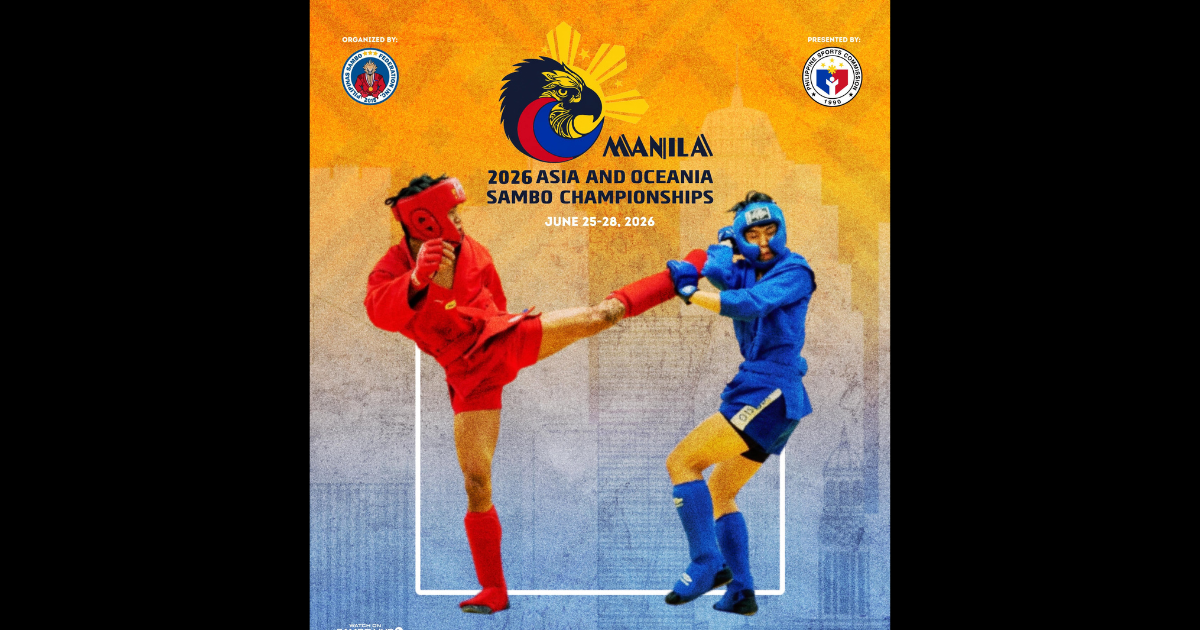
The 11th Asia-Oceania Sambo Championships, presented by the Philippine Sports Commission and held at the Ninoy Aquino Stadium, was never just about medals. For PSC Chairman Patrick Gregorio, it was the clearest demonstration yet of a national sports development strategy that is quietly, methodically, and very deliberately paying off. Bring the world to Manila. Put your young athletes against the best. Watch what happens. And then build from there.
What happened was Sophia Nicole Novino — a 17-year-old judoka and incoming Grade 12 student at UE — stepping onto the mat in her first major international sambo meet and fighting a two-time world youth silver medalist from Kazakhstan to within 24 seconds of the final buzzer. That silver medal didn’t just make headlines. It made a case.
Patrick Gregorio’s Vision: Stop Sending Athletes Out — Start Bringing the World In
The numbers alone tell the story of why hosting matters. The Philippines had at least 40 local athletes competing at the Asia-Oceania Sambo Championships. Sending that many competitors to Europe or South America for international experience would have been financially impossible to justify — and Gregorio knows it.
“We have at least 40 local athletes here. If we sent them all to Europe and South America for competitions abroad, the PSC won’t be able to justify it,” Gregorio said during the post-event press conference. “This (result) justifies what we are trying to do. Yung kalaban ni Sophia world-ranked pala.”
The PSC chairman was referring to Kazakhstan’s Karakat Rakhybay, who needed a hard-fought 3-1 decision to get past Novino in the women’s youth -47kg finals. For Gregorio, that result wasn’t just a pleasant surprise — it was confirmation that the philosophy works.
“These are eye-openers for us. This is the beauty of what we are trying to do. Sinsasala nating kaagad ng ating mga athletes by giving them the opportunities to go up against the world’s best as in sambo,” Gregorio stressed. “If we see the potential and promise of a sport and its athletes, they are much easier to support — like sambo.”
Novino herself left the championships with more than a medal. The experience shifted something in her.
“Gusto ko po mag-devote more time sa sport kasi sa opportunities na maaring ibigay nito para sa akin,” she said — a declaration from a teenager who arrived as a judo player and is leaving as a sambo prospect with a world-class performance already on her resume.
“All Eyes Are on the Philippines”: How the Sambo World Woke Up to What Manila Can Do
If the medals validated the athletes, the reaction from the international sambo community validated the hosts. Pilipinas Sambo Federation president Paolo Tancotian didn’t need to chase down compliments after the championships wrapped — they came to him.
More than 15 foreign delegations personally approached Tancotian to thank and congratulate him for the standard of care their teams received — from the moment they landed at the airport through to their time at the Ninoy Aquino Stadium. The International Sambo Federation and the Sambo Union of Asia and Oceania didn’t just take note — they held the Philippines up as the benchmark.
“We have been made the example by the International Sambo Federation and Sambo Union of Asia and Oceania in how to run a competition properly. Bilib na bilib sila,” Tancotian said. “More than 15 foreign squads personally thanked and congratulated yours truly for the first-class treatment they had received from the moment they arrived at the airport, to the hotel and, of course, our excellent venue, the Ninoy Aquino Stadium.”
The weight of that recognition was not lost on him.
“We are being talked about in the sambo world. All eyes are on the Philippines,” Tancotian said. “This is more than what I could dream for and the federation thanks the PSC for making it happen.”
For a sport still building its profile in the country, and for a national sports commission betting that homegrown tournaments can do what overseas travel budgets cannot, the 11th Asia-Oceania Sambo Championships delivered everything it was supposed to — and then some. The grassroots foundation is in place. The global spotlight has arrived. What comes next for Philippine sambo is no longer a question of potential. It is a question of how fast they can build on it.

Lito "Thunder Kid" Adiwang saw his win streak snapped following a close split decision against Hiroba Minowa of Japan. This Read more

Former ONE Flyweight World Champion Geje "Gravity" Eustaquio treats his teammates like his own brothers. This is why the Team Read more

Former ONE Featherweight World Champion Honorio "The Rock" Banario is looking to bounce back and target the ONE World Title Read more

In 2013, UFC lightweight champion Khabib Nurmagomedov made famous the phrase "If Sambo was easy, it would be called Jiu-Jitsu," Read more