by Vincent Juico
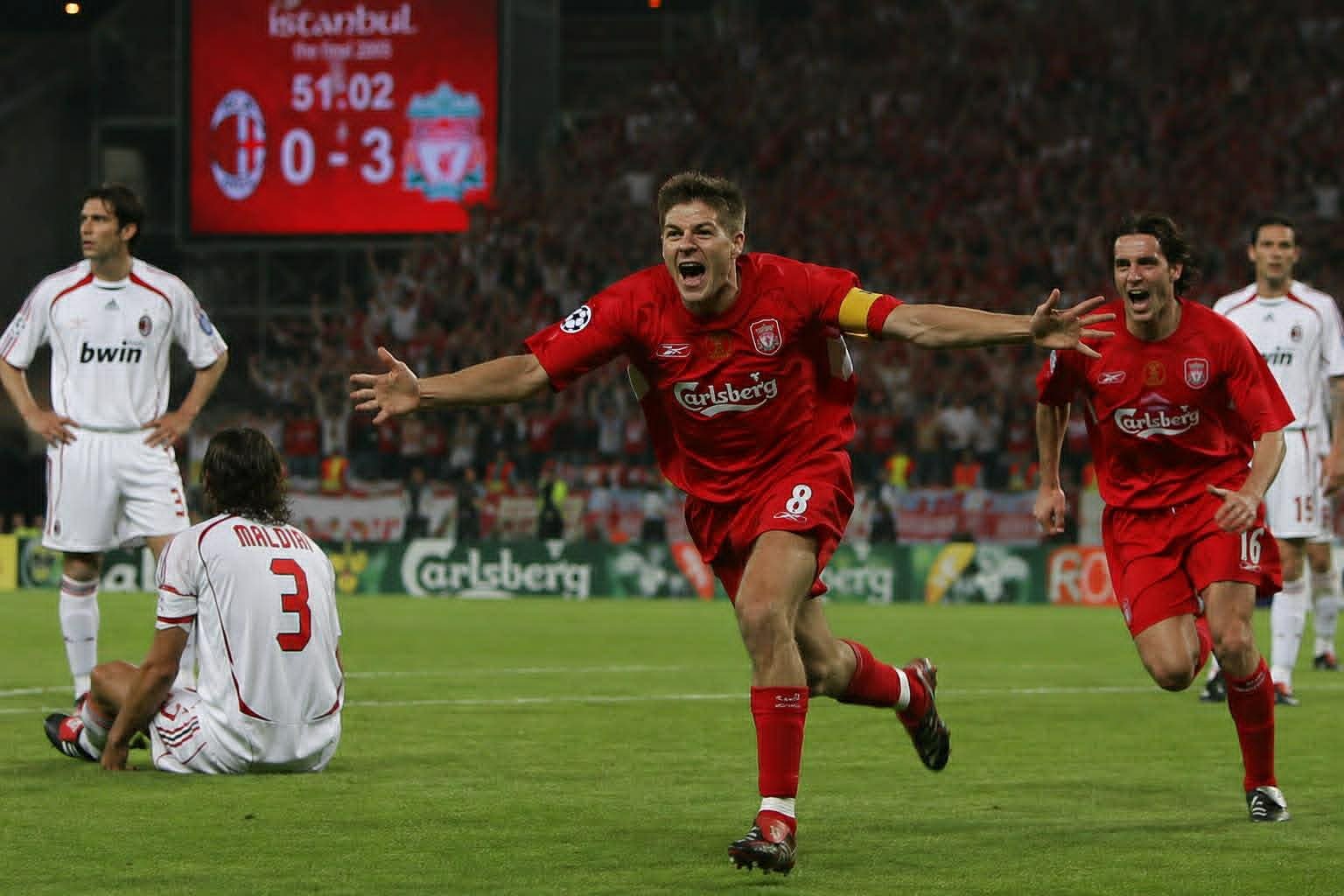
There are nights in football that refuse to behave like sport and instead turn into folklore. Istanbul in 2005 was one of them. At half-time, Liverpool FC weren’t just losing a final; they were being unpicked by a ruthless machine in AC Milan colours, 3–0 down and staring at a lesson in European superiority under the lights of the 2005 UEFA Champions League Final at the Atatürk Stadium.
What made the second half so difficult to believe wasn’t simply the comeback, but the speed of it. Liverpool didn’t gradually chip away; they detonated the game. Within six extraordinary minutes, goals from Steven Gerrard, Vladimir Smicer, and Xabi Alonso ripped through Milan’s certainty and replaced it with doubt. A match that had felt settled suddenly had no narrative left to rely on.
From there, it became something more primal than tactical adjustment. Milan still had chances, enough to win it several times over, but football had begun to tilt towards the improbable. Jerzy Dudek’s double save from Andriy Shevchenko in extra time felt like a moment that bent logic rather than followed it. It was chaos, but a very specific kind: the controlled chaos of belief refusing to die.
By the time it reached penalties, the psychology had flipped entirely. Milan, the architects of control earlier in the night, looked like a side carrying the weight of what they had failed to finish. Liverpool, somehow, looked lighter. Dudek’s now-legendary ‘spaghetti legs’ routine only added to the sense that normal rules had been quietly suspended.
When it was over, Liverpool weren’t just champions of Europe; they were the authors of one of football’s most cited reversals. Istanbul didn’t become famous because of a comeback alone. It became famous because it felt impossible even while it was happening. And that is why, long after the final whistle, it still doesn’t sound real when you say it out loud.
![Tom 'Iceman' Flores [YouTube screen capture]](https://sportsbytes.com.ph/wp-content/uploads/2021/02/Screenshot_142.png)
Tom "The Iceman" Flores is a four-time pro-football champion and a trailblazing coach, but he has yet to receive his Read more

One of the challenges for athletes, both amateurs and professionals, amid the on-going pandemic is to stay fit in spite Read more

"Marvelous" Marvin Nathaniel Hagler had knockout power in both hands. He could fight either southpaw or unorthodox, anything to keep Read more
Wataru Misaka was 5-foot-7 and was drafted by the New York Knicks of the then BAA (Basketball Association of America), Read more

- Power, Pride, Pain, Redemption - October 13, 2026
- MVP MMA Takes Aim - August 13, 2026
- The Heart of Resilience - July 27, 2026