Southeast Asia is moving toward a major transformation of its sporting ecosystem following the adoption of the Bali Declaration on Youth and Sports. Regional leaders have also outlined plans to elevate the Southeast Asian Games (SEA Games) to global standards through structured reforms and new flagship competitions.
The initiative includes the planned launch of the Southeast Asia Marathon Series (SEAMS) and the Southeast Asia Pro Cycling Tour (SEA PCT). These new events are designed to strengthen athlete development pathways and raise competitive standards across the region.
Philippine Sports Commission Chairman Patrick C. Gregorio emphasized the importance of repositioning sports as a long-term investment. He highlighted sports tourism, economic growth, and regional cooperation as key outcomes of the proposed reforms.
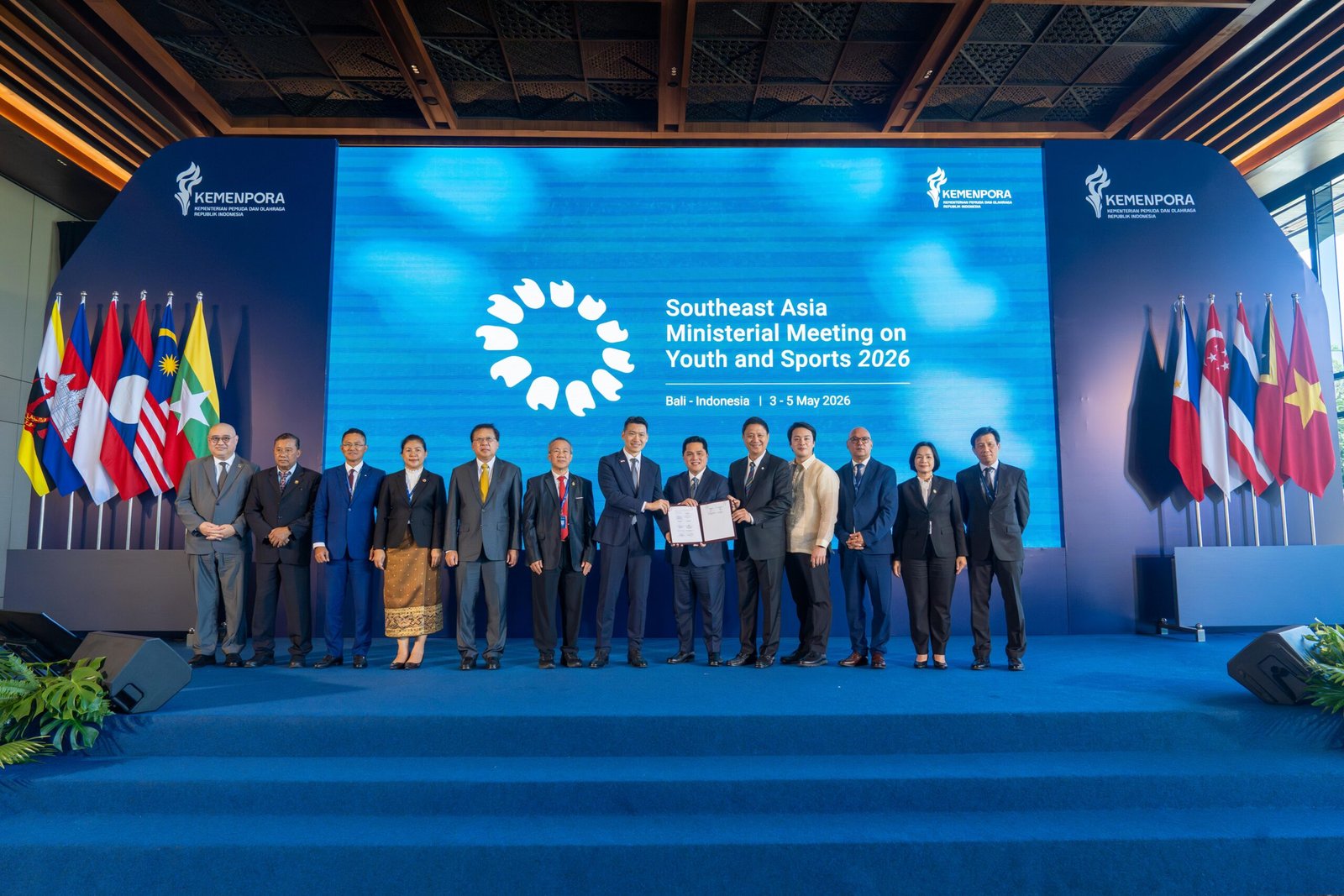
Regional sports transformation agenda
Gregorio said the Philippines supports the Bali Declaration and is ready to collaborate with Southeast Asian partners in strengthening the region’s global sports positioning. He noted that sports can serve as a platform for economic development, cultural exchange, and sports diplomacy.
Indonesia’s Minister of Culture, Youth and Sports Erick Thohir, who is also a member of the International Olympic Committee, stressed that improving the SEA Games would strengthen the entire regional sports ecosystem. He said more consistent and higher-quality competitions could attract investment and boost sponsorship value.
Thohir also pointed out that improved regional events could generate employment opportunities and expand sports tourism. He added that longer visitor stays and increased cross-border participation would enhance destination demand across Southeast Asia.
Economic scale and opportunity
Global sports industry figures underscore the scale of opportunity, with sports sales reaching US$521 billion in 2024 and sports tourism valued at US$625 billion, representing around 10 percent of global tourism activity. The sector continues to grow at an estimated annual rate of eight percent.
With a combined population of around 650 million, Southeast Asia is seen as a major untapped market for sports development and tourism expansion. Policymakers view regional cooperation as a key driver of future growth.
Gregorio stressed that sports should be treated as an investment rather than an expense. He said structured development programs and stronger competitions are necessary to maximize both athlete potential and economic returns.
New regional competitions
The Southeast Asia Marathon Series is envisioned to match the prestige of major global marathon events in cities such as Boston, New York, and London. The series aims to elevate endurance sports within the region while attracting international participation.
The Southeast Asia Pro Cycling Tour is also designed to bring elite global cyclists to the region. It will serve as a development platform for Southeast Asian athletes aiming to compete in top-tier international cycling events, including the Tour de France.
Both initiatives are intended to improve competition quality and ensure Southeast Asian athletes are better prepared for global stages. They also aim to strengthen the region’s sports identity and visibility.
SEA Games development concerns
Despite producing world-class athletes such as Carlos Yulo, Joseph Schooling, Hoang Xuan Vinh, Veddriq Leonardo, and Panipak Wongpattanakit, concerns remain about the SEA Games’ inconsistent sport lineup and competitive depth.
Gregorio noted that many elite athletes skip the SEA Games due to limited event selection and uneven competition standards. This has contributed to declining audience engagement and reduced overall event value.
He warned that if regional competitions do not improve in scale and quality, athlete development and industry growth will remain constrained. He emphasized the need to evolve the SEA Games into a stronger regional sports intellectual property.
Future regional vision
The Bali Declaration, adopted by 11 Southeast Asian ministers, recognizes youth and sports as key drivers of peace, unity, and sustainable development. It calls for stronger cooperation in athlete development, governance, and international event hosting.
Gregorio said the long-term vision is to build a unified regional sports identity capable of hosting world-class events. He emphasized collaboration, shared ambition, and long-term investment in youth development.
He added that Southeast Asia’s collective progress in sports could one day position the region to host the Olympic Games as a unified bloc, representing a historic milestone in global sports cooperation.

Lito "Thunder Kid" Adiwang saw his win streak snapped following a close split decision against Hiroba Minowa of Japan. This Read more

Utah Jazz guard Jordan Clarkson has one of the more positive NBA late draftee successes in recent memory. Drafted 46th Read more

Like his brother Steph, Seth Curry also knows how to make clutch plays. Curry hit a top of the key Read more

The Milwaukee Bucks rewrote the record books Tuesday night, making a whopping 29 triples in a huge 144-97 win over Read more