by Vincent Juico
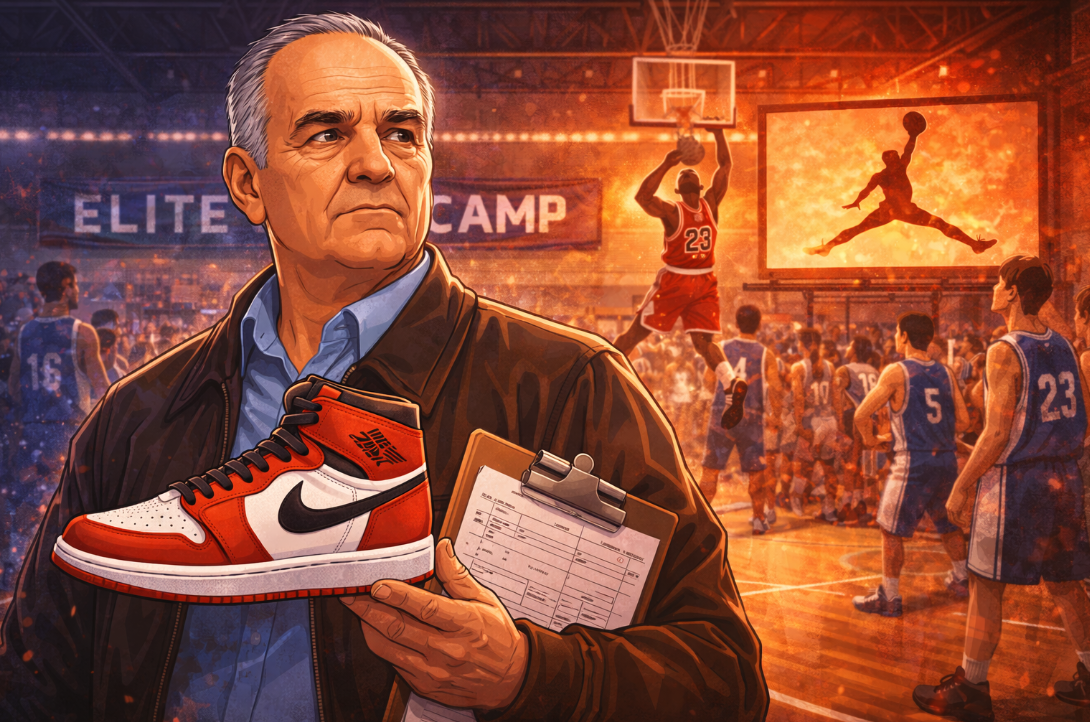
Long before signature shoes became standard issue and athletes evolved into global brands, Sonny Vaccaro was operating on a different wavelength.
He wasn’t a sneaker designer. He wasn’t a CEO. What he was, quietly and persistently, was a talent spotter with a marketer’s instinct for cultural timing. And that combination changed the business of sport.
Vaccaro’s legacy is often reduced to one headline moment: bringing Michael Jordan to Nike. But focusing only on that deal misses the broader truth. Vaccaro didn’t just help land Jordan. He helped redefine how value is identified, packaged, and sold in sports.
Before the mid-1980s, endorsement strategy was conservative by design. Brands spread their bets across multiple athletes, minimizing risk and maximizing visibility. Vaccaro saw inefficiency in that model. He believed that the right athlete—singular, magnetic, culturally resonant— could outperform an entire portfolio.
That belief required more than conviction. It required a rethinking of what an athlete actually represented.
To Vaccaro, players weren’t just performers. They were stories. They carried identity, aspiration, and emotional connection. And if a brand could align itself deeply enough with that identity, it wouldn’t just sell products; it would shape culture.
That thinking was ahead of its time. It’s also the foundation of modern sports marketing.
The Jordan deal became the proof of concept. Instead of endorsing a product, Jordan became the product. The Air Jordan line wasn’t just footwear; it was narrative made tangible. Consumers weren’t buying leather and rubber; they were buying a piece of an emerging mythology.
But Vaccaro’s influence didn’t stop at the professional level.
In many ways, his most disruptive work came through grassroots basketball. He pioneered the idea of investing in young talent early, which meant funding summer camps, high school tournaments, and exposure circuits that connected brands directly to future stars. It was a pipeline strategy before pipelines became industry jargon.
That model now underpins the global basketball ecosystem. Shoe companies don’t just compete in the NBA; they compete in gyms, at youth tournaments, and across social media, tracking prospects years before they turn pro. Vaccaro saw that future early, and helped build it.
There is, however, a complicated edge to that legacy.
By attaching corporate influence to amateur sport, Vaccaro also accelerated the commercialization of youth athletics. The same system that created opportunity also raised uncomfortable questions about exploitation, particularly within institutions like the NCAA. In a twist that defines his career, Vaccaro later became one of the system’s most vocal critics, challenging the very structures his innovations helped empower.
That tension is what makes his story worth examining.
Vaccaro wasn’t operating with a perfect blueprint. He was improvising in a space where business, sport, and culture were beginning to collide. Some of his ideas unlocked unprecedented value for athletes. Others exposed fault lines that the industry is still grappling with today.
But strip it back, and one thing stands out: he saw the athlete differently.
Where others saw endorsements, he saw ecosystems. Where others saw players, he saw platforms. And where others managed risk, he leaned into it.
That mindset was more than any single deal; it was his real contribution.
Because in the modern sports economy, where athletes are brands, content is currency, and cultural relevance drives revenue, the game off the court often matters just as much as the one on it.
Sonny Vaccaro understood that before almost anyone else.

"Marvelous" Marvin Nathaniel Hagler had knockout power in both hands. He could fight either southpaw or unorthodox, anything to keep Read more
Wataru Misaka was 5-foot-7 and was drafted by the New York Knicks of the then BAA (Basketball Association of America), Read more

BaliPure Purest Water Defenders Head Coach Rommel Abella mentioned the word positionless, which is a word you normally associate with Read more
![Stephen Curry [photo credit: Wikimedia Commons | TechCrunch]](https://sportsbytes.com.ph/wp-content/uploads/2021/04/TechCrunch_Disrupt_San_Francisco_2019_-_Day_1_48835097887_cropped-scaled.jpg)
As the nation observes holy week, in my 45 years of existence, I've seen athletes both professional and amateur, wear Read more

- He Changed Sports Marketing - April 6, 2026
- Basketball’s Annual Crystal Ball - March 29, 2026
- Justice Delayed, Career Denied - March 24, 2026