by Vince Juico
The story of Brian Banks is one of the most striking modern examples of wrongful conviction, resilience, and the fragility of justice systems. It intersects with themes of race, institutional failure, media narratives, and redemption.
Brian was a standout high school football player in California, widely expected to play at the collegiate level at USC (University of Southern California). His trajectory reflected a familiar narrative: athletic talent as a pathway to opportunity.
![Brian Banks lost years of his life to a wrongful conviction—his story raises serious questions about justice. [By Jeff Lewis - Brian Banks, <a href="https://creativecommons.org/licenses/by-sa/4.0" title="Creative Commons Attribution-Share Alike 4.0">CC BY-SA 4.0</a>, <a href="https://commons.wikimedia.org/w/index.php?curid=66130095">Link</a>]](http://sportsbytes.com.ph/wp-content/uploads/2026/03/Brian_Banks_1.jpg)
That trajectory was abruptly derailed in 2002 when he was accused of rape and kidnapping by a classmate. Facing the risk of a long prison sentence if convicted at trial, Banks accepted a plea deal despite maintaining his innocence. This decision highlights a key structural issue.
Plea bargaining pressure, wherein defendants—especially young and under-resourced individuals—often accept guilty pleas to avoid harsher penalties, even when innocent.
Banks served more than five years in prison and several additional years on parole, including being required to register as a sex offender. The consequences were multilayered, including the loss of prime developmental years, both athletic and personal.
He suffered the permanent stigma associated with sex offender status, as well as the psychological impact of incarceration and social exclusion.
The economic disadvantage resulting from disrupted education and career paths underscores how wrongful convictions are not just legal errors; they are life-altering events with long-term structural consequences.
The turning point came when his accuser recanted years later.
With help from the California Innocence Project, Banks’ conviction was overturned in 2012.
This phase reveals several systemic insights:
Wrongful convictions can persist without external advocacy, as recantations are rare and often insufficient without legal support.
Nonprofit legal organizations play a critical corrective role.
After exoneration, Banks briefly achieved what once seemed impossible: he signed with the Atlanta Falcons and later had a short stint with the Las Vegas Raiders (then the Oakland Raiders). While symbolically powerful, this “return” was limited.
It was limited because his professional career window had largely closed.
Physically, his peak years had been lost, making his comeback more symbolic than sustainable.
This complicates the idea of redemption. Even when justice is restored, time cannot be returned, and opportunities are not fully recoverable.
Brian Banks’ story is often framed as inspirational—and it is, make no mistake—but that framing can be misleading if it overshadows the deeper issue.
His resilience is exceptional, but the system that required such resilience is deeply flawed.
His case should not just inspire; it should provoke scrutiny of how justice systems operate, especially for vulnerable individuals.

"Marvelous" Marvin Nathaniel Hagler had knockout power in both hands. He could fight either southpaw or unorthodox, anything to keep Read more
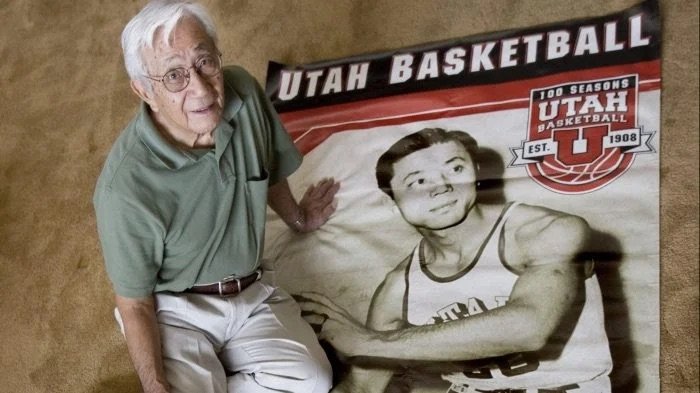
Wataru Misaka was 5-foot-7 and was drafted by the New York Knicks of the then BAA (Basketball Association of America), Read more

BaliPure Purest Water Defenders Head Coach Rommel Abella mentioned the word positionless, which is a word you normally associate with Read more
![Stephen Curry [photo credit: Wikimedia Commons | TechCrunch]](https://sportsbytes.com.ph/wp-content/uploads/2021/04/TechCrunch_Disrupt_San_Francisco_2019_-_Day_1_48835097887_cropped-scaled.jpg)
As the nation observes holy week, in my 45 years of existence, I've seen athletes both professional and amateur, wear Read more

- Justice Delayed, Career Denied - March 24, 2026
- Svitolina wins 2026 ASB Classic - January 14, 2026
- Sports in 2026 - December 30, 2025