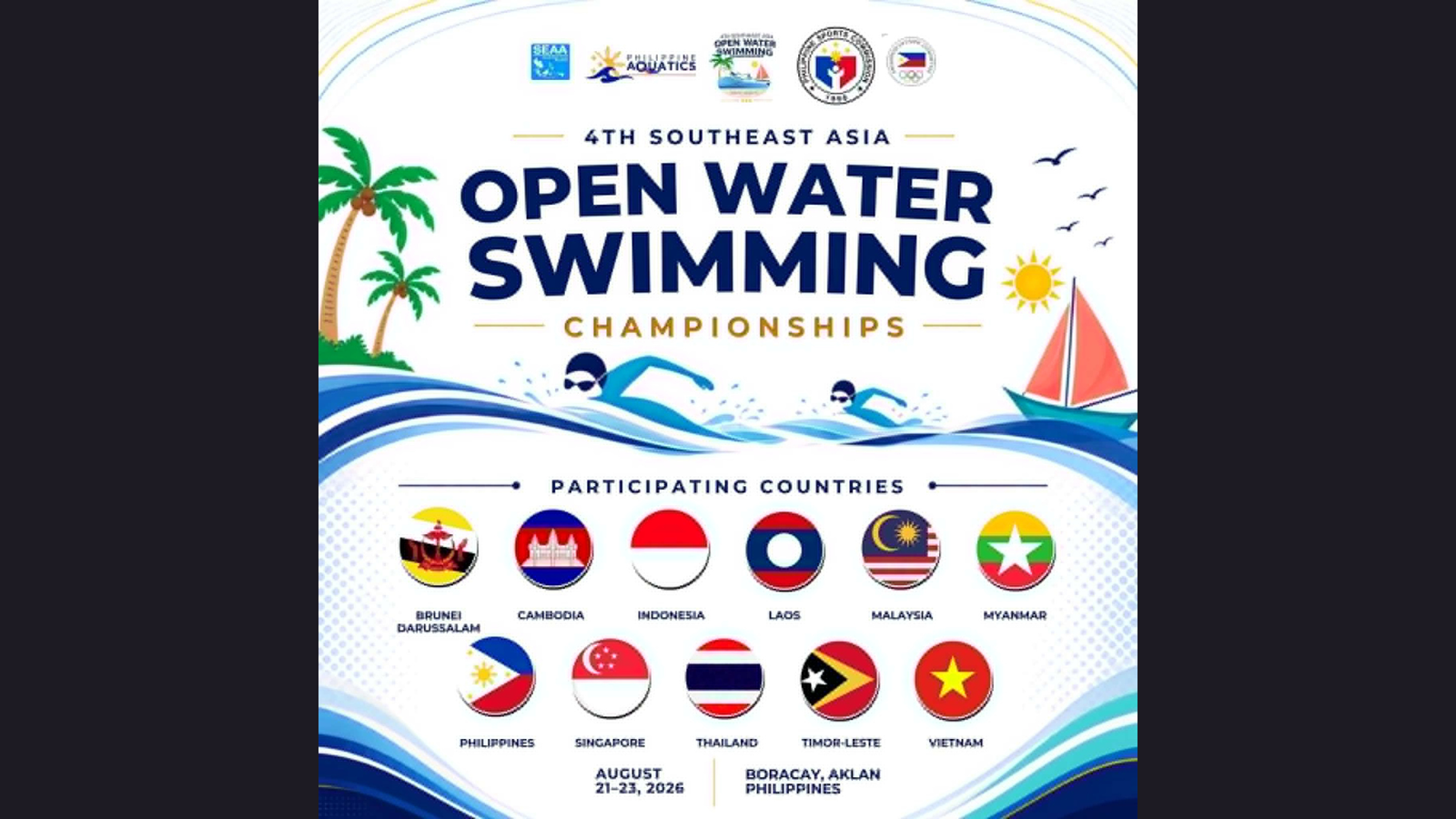
The Philippines is stepping onto the international stage for open water swimming, and it’s doing so in one of its most iconic locations. Boracay Newcoast in Malay, Aklan will host the 4th Southeast Asia Open Water Swimming Championships from August 21 to 23, marking the country’s first time hosting the regional event. Organizers say safety and environmental protection are driving nearly every decision behind the scenes.
Philippine Aquatics Inc. vice president Jojo Quilop confirmed that local organizers have been working closely with multiple agencies to prepare for the meet. He said the goal is simple: give athletes a secure environment while showcasing everything Boracay has to offer.
A Safety Plan Built Around Every Possible Scenario
Quilop said the safety plan for the championships goes well beyond basic preparation. Philippine Aquatics Inc. and the local organizing committee submitted a comprehensive proposal to Asia Aquatics detailing exactly how many kayaks, rubber life boats, and jet skis will be deployed during the meet. That plan required formal approval before organizers could move forward with final preparations.
“We also are looking at whatever loopholes that are left so that our safety measures are airtight,” Quilop said. He added that the Philippine Coast Guard and Philippine National Police will provide additional support once the competition gets underway, giving organizers multiple layers of coverage throughout the event.
Coordination hasn’t stopped at the national level, either. Quilop said meetings have already taken place with the provincial risk reduction and management officials of Aklan, with another round of meetings planned with municipal officials in the days ahead. That level of preparation reflects just how seriously organizers are treating the country’s first hosting of this regional championship.
Location played a major role in the planning process as well. Quilop noted that the competition will take place within Boracay’s cove, an area chosen specifically because the waters and weather are calmer there compared to other parts of the island. That decision alone should help reduce risk for swimmers competing across multiple distances over the three-day event.
Lifeguard Support and a Long-Term Vision for Philippine Swimming
Adding another layer of protection, Philippine Lifesaving will send five highly trained lifeguards to the event each day the races are held. Philippine Lifesaving secretary general DJ Salonga said the organization operates one of its 68 nationwide centers directly in Boracay, making it a natural partner for the championships.
“We will send five volunteer lifeguards daily during the competition to supplement and complement whatever safety requirements that are needed by the organizers,” Salonga said. He added that every volunteer lifeguard involved has completed intensive training and earned official Philippine Lifesaving certification, ensuring a consistent standard of readiness throughout the event.
Beyond athlete safety, Quilop said organizers are equally focused on protecting Boracay’s marine environment during the championships. “We are conscious of Boracay’s reputation as [the] top tourist destination of our country, so we want to maintain that status,” he said, emphasizing that environmental stewardship remains a priority alongside athlete welfare.
Looking ahead, Quilop said this event represents more than a single competition for Philippine Aquatics Inc. The organization sees it as a launching point for future international open water swimming events across the country’s roughly 7,100 islands, positioning the Philippines as a serious contender to host similar competitions in the years to come.

Philippine Swimming Inc. (PSI), the country's national governing body for aquatic sports, is determined to strengthen its grassroots program to Read more

The world governing body for swimming known by the acronym FINA has withdrawn its recognition of the members of the Read more
![Swimmer Xiandi Chua of the Philippines [photo credit: PSC-POC]](https://sportsbytes.com.ph/wp-content/uploads/2023/09/Xaindi-Chua02_psc-poc-media-poolphoto.jpg)
Three Filipino swimmers failed to advance in their respective individual events on Sunday in Day 1 of the swimming competitions Read more
![Kayla Sanchez of the Philippines [PSC-POC photo]](https://sportsbytes.com.ph/wp-content/uploads/2023/09/received_170366996110061.jpeg)
Tokyo Olympics medalist Kayla Sanchez debuted for the Philippines in the women’s 4x100m freestyle but the country will still have Read more