The 32nd season of the National Capital Region Athletic Association officially opened at the Dasmariñas Arena with its traditional spotlight on basketball and volleyball competitions. However, the ceremony also carried a broader vision for the league’s future as officials discussed the possibility of introducing Olympic sports into its calendar.
During the festivities, Patrick Gregorio, chairman of the Philippine Sports Commission, encouraged the league to expand beyond its usual lineup and consider disciplines that could help develop future Olympic athletes.
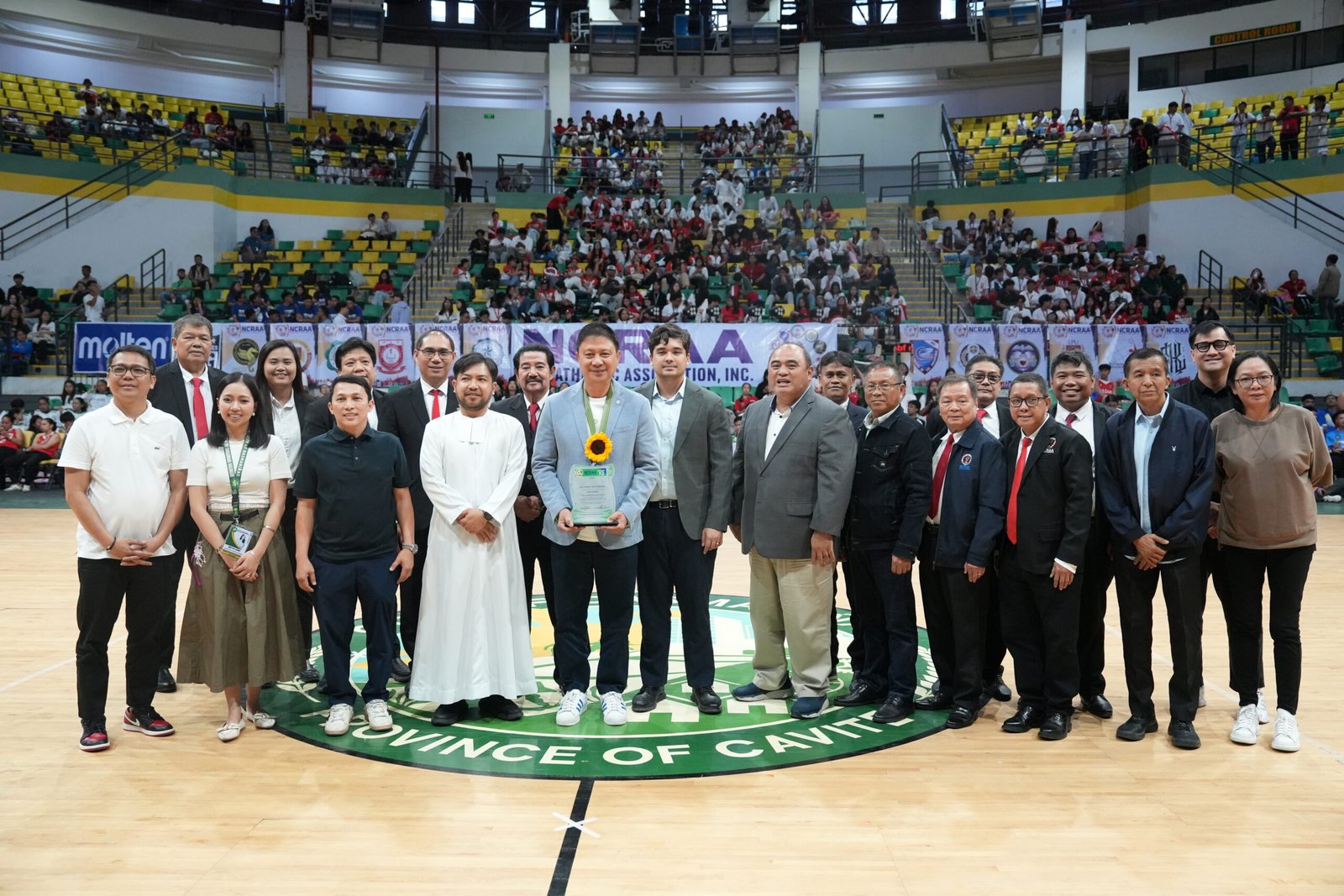
Gregorio, who received a Plaque of Recognition during the event, urged NCRAA officials to explore the inclusion of boxing and taekwondo in the competition schedule. He emphasized that collegiate leagues could play a critical role in identifying athletes who may represent the country in the Olympic Games.
“Sana ma-consider nyo ang mga Olympic sports tulad ng boxing at taekwondo. Nandito po ang PSC para tumulong at para makahanap tayo ng pwedeng manalo ng medalyang ginto sa Olympics sa LA and 2032 Brisbane,” Gregorio said.
NCRAA General Manager Buddy Encarnado responded positively to the proposal and expressed confidence that the league could organize tournaments for both sports this season. He noted that with the support of the PSC, the addition of Olympic disciplines is a realistic possibility.
The NCRAA has traditionally featured sports such as basketball, volleyball, cheerleading, futsal, table tennis, and badminton. Expanding into Olympic sports would represent one of the league’s most significant structural developments in recent years.
Early results highlight opening day action
Competition began even before the formal ceremony as junior and senior basketball teams opened the season with tightly contested games. The DLSU-D Junior Patriots edged the Emilio Aguinaldo College-Cavite Junior Vanguards, 76–75, in a dramatic finish.
Dwayne Marasigan delivered the decisive moments of the contest by converting crucial free throws in the final seconds to secure the narrow victory. The win gave the Junior Patriots an early boost at the start of the tournament.
In the senior division, the DLSU-D Patriots successfully protected their home floor with a 91–77 triumph over the AIMS Blue Sharks. Meanwhile, the University of Luzon Golden Tigers opened their campaign strongly against the Emilio Aguinaldo College-Cavite Generals in one of the day’s headline matchups.
The NCRAA’s move to consider Olympic sports mirrors a broader trend in collegiate athletics across the Philippines. The National Collegiate Athletic Association Philippines has already introduced boxing, golf, weightlifting, and gymnastics during its ongoing Season 101.
Similarly, the University Athletic Association of the Philippines is preparing to stage its first golf tournament in league history. These developments highlight how collegiate competitions are expanding beyond traditional team sports.
A venue built for multi-sport development
The opening ceremony took place inside the Dasmariñas Arena, located within the sprawling Dasmariñas Sports Complex in Cavite. The facility forms part of a major city development project that integrates academic institutions and sports infrastructure within a single district.
The complex covers approximately 11.5 hectares and includes the 5,000-seat indoor arena, a track and field oval, and various training facilities. It was designed as a multi-sport hub capable of hosting numerous athletic disciplines.
Among the facilities planned within the complex are a boxing gym and additional venues for sports such as badminton, fencing, futsal, and swimming. The development reflects the city’s ambition to create a center for both academic and athletic growth.
With basketball and volleyball continuing as its core competitions, the NCRAA is exploring how Olympic sports could expand the opportunities available to student-athletes. League officials believe the move could help transform collegiate tournaments into stronger pipelines for national sports development.
If boxing and taekwondo are eventually included in the league calendar, the NCRAA could play a larger role in identifying and nurturing athletes with Olympic potential. Such a shift would align collegiate competition with the country’s long-term ambition of producing future gold medal contenders.

Lito "Thunder Kid" Adiwang saw his win streak snapped following a close split decision against Hiroba Minowa of Japan. This Read more
Utah Jazz guard Jordan Clarkson has one of the more positive NBA late draftee successes in recent memory. Drafted 46th Read more

Like his brother Steph, Seth Curry also knows how to make clutch plays. Curry hit a top of the key Read more

The Milwaukee Bucks rewrote the record books Tuesday night, making a whopping 29 triples in a huge 144-97 win over Read more