The Philippine Women’s U-17 National Team continued its build-up for international competition by staging a US Talent Identification Camp from January 30 to February 3 at the Great Park Sports Complex in California. The five-day program brought together more than 150 US-based Filipina players for structured national team evaluations.
The camp forms part of the team’s long-term preparations for the AFC U-17 Women’s Asian Cup, scheduled from April 30 to May 17, 2026, in Suzhou, China. The continental tournament also serves as the qualification route to the FIFA U-17 Women’s World Cup.
![Over 150 US-based Filipina footballers took part in the five-day evaluation program. [photo credit: The Philippine Women’s U-17 National Team Camp]](http://sportsbytes.com.ph/wp-content/uploads/2026/02/Screenshot_647.png)
Players who attended were born between 2009 and 2011, reflecting the federation’s emphasis on early identification and sustained development. The sessions were designed to evaluate players within a unified technical framework rather than make immediate selections.
Nahuel Arrarte returns to lead youth program
The camp marked the return of Nahuel “Naz” Arrarte as head coach of the Philippine Women’s U-17 National Team. Arrarte previously served as an assistant coach for the senior national team during its last World Cup campaign.
His appointment brings continuity and international experience as the youth program aligns its direction with long-term national team objectives. Arrarte worked closely with the national team director throughout the camp, overseeing all training sessions.
The official draw for the AFC U-17 Women’s Asian Cup is set for February 12, 2026, at the AFC House in Kuala Lumpur. Preparations following the draw are expected to further refine the team’s developmental priorities.
Building a global Filipina talent pipeline
The US camp implemented a standards-based talent identification system aimed at tracking Filipina players across different regions and age groups. Organizers stressed that the initiative was focused on monitoring progress over time rather than ranking individual performances.
A total of 150 players participated, traveling from across North America including Washington, D.C., Texas, Alabama, New York, Seattle, Vancouver, and Toronto. The wide geographic representation highlighted the depth of Filipina football talent outside the Philippines.
Over the course of five days, players completed 10 on-field training sessions in a professionally managed environment. A cost-sharing model was used to help support operations while maintaining training standards and accountability.
Team officials emphasized transparency and collaboration as the program evolves. Support from local organizers, volunteer coaches, families, and community partners played a key role in delivering the camp.
Philippine Women’s U-17 team management reiterated its commitment to connecting domestic and overseas talent through a single global pathway. The approach aims to strengthen continuity between youth and senior levels while building a deeper and more sustainable player pool for the future.
![Tom 'Iceman' Flores [YouTube screen capture]](https://sportsbytes.com.ph/wp-content/uploads/2021/02/Screenshot_142.png)
Tom "The Iceman" Flores is a four-time pro-football champion and a trailblazing coach, but he has yet to receive his Read more
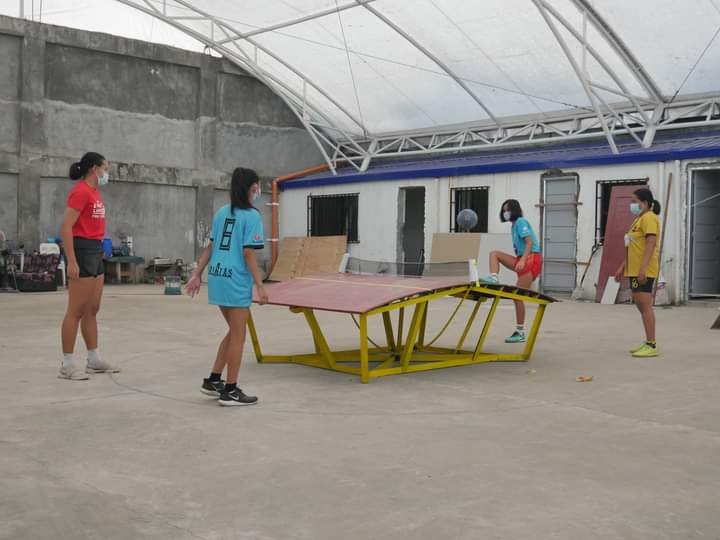
One of the challenges for athletes, both amateurs and professionals, amid the on-going pandemic is to stay fit in spite Read more

The Philippines Football League brought to you by Qatar Airways has decided on a July 17, 2021 kickoff for its Read more

A strong second half enabled China to beat the Philippine Azkals, 2-0 Monday (Tuesday Manila time) in the 2022 FIFA Read more