Team Philippines walked away from the 33rd Southeast Asian Games ranked sixth overall, a result that drew criticism when viewed solely through the lens of total medals.
A deeper breakdown, however, tells a far more encouraging story rooted in Olympic sports, where the country stood shoulder to shoulder with regional heavyweights.
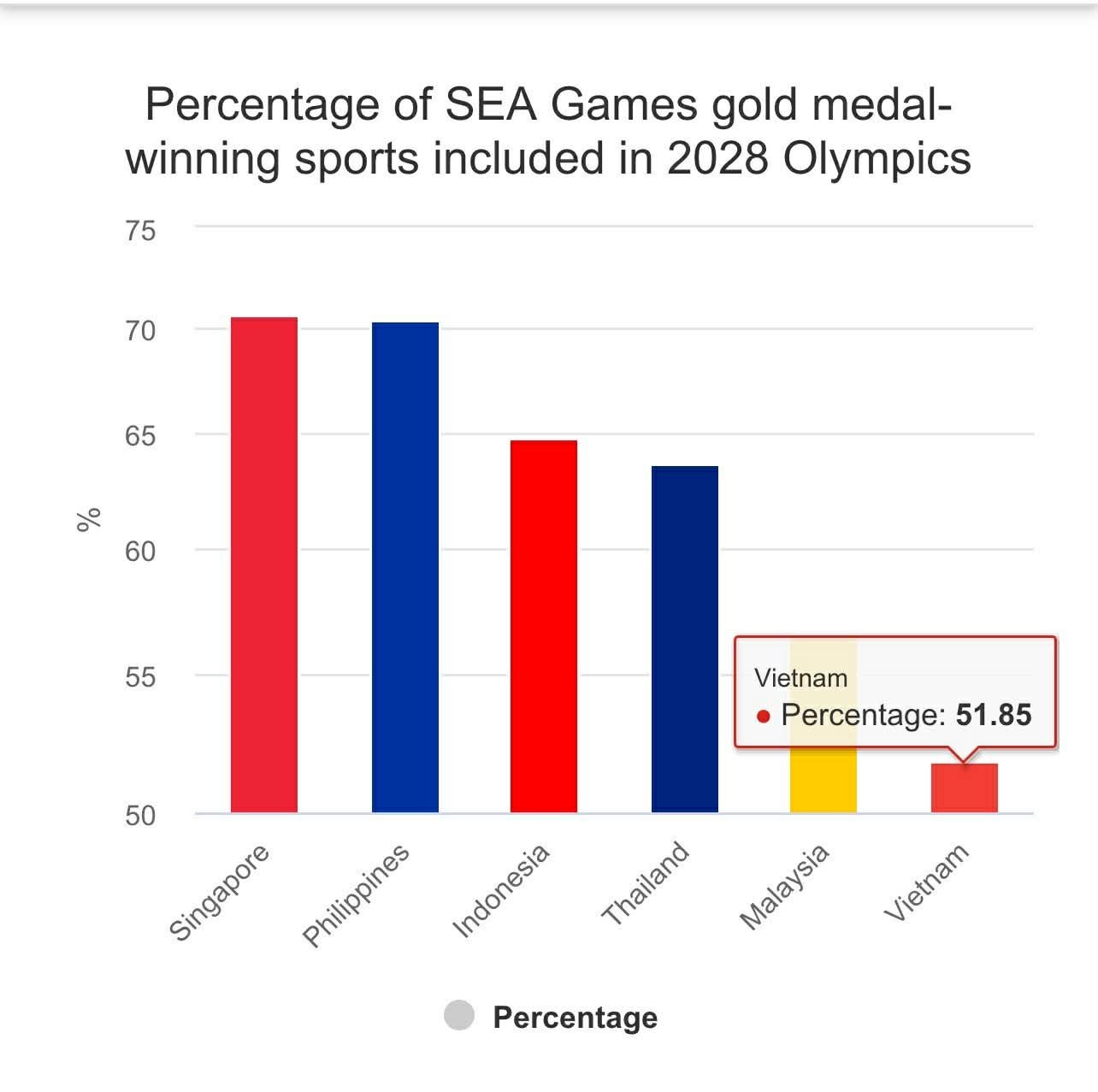
Out of the Philippines’ 50 gold medals, 70 percent were captured in Olympic disciplines. That figure tied Singapore for the highest percentage among the 11 participating nations, according to a report by Vietnamese outlet vnexpress.net.
Singapore finished fifth overall with 52 gold medals, many coming from aquatics, one of the cornerstones of the Olympic program. The Philippines, by contrast, spread its success across a broad range of global sports.
Athletics delivered five gold medals, while swimming and gymnastics produced three each. Triathlon and modern pentathlon also yielded three apiece, underscoring the country’s growing versatility.
Boxing disputes and breakthrough wins
Boxing, long a pillar of Philippine international success, became one of the most debated competitions of the Games. Eumir Marcial secured the nation’s only boxing gold, while Thailand dominated most of the divisions.
Several observers argued that controversial officiating decisions denied the Philippines as many as three or four additional titles, further skewing the overall medal picture.
Outside the ring, the Philippines celebrated historic and breakthrough victories in women’s football, men’s baseball, tennis, and beach volleyball. These wins highlighted steady progress in team and technical sports traditionally dominated by regional rivals.
Additional gold medals came from basketball, judo, skateboarding, softball, taekwondo, rowing, sailing, short-track speed skating, weightlifting, and wrestling, all of which fall under the Olympic program.
Olympic outlook remains promising
The absence of two-time Olympic champion Carlos Yulo also loomed large. Host restrictions limited gymnasts to a single apparatus, prompting Yulo to sit out the competition.
Had he been allowed to compete fully, projections suggested the Philippines could have added four to five more gold medals, including a potential men’s team title in artistic gymnastics.
By percentage of Olympic-sport golds, Indonesia followed the Philippines and Singapore at just under 65 percent. Thailand ranked next at 64 percent, ahead of Malaysia at 57 percent and Vietnam at 51.85 percent.
Thailand still dominated the overall medal table as host with 233 golds, followed by Indonesia, Vietnam, Malaysia, and Singapore.
Yet for the Philippines, the emphasis on Olympic disciplines offers a more meaningful measure of progress. As the countdown to the 2028 Los Angeles Olympics continues, the country’s SEA Games performance suggests its brightest moments may lie on the world’s biggest sporting stage.

Lito "Thunder Kid" Adiwang saw his win streak snapped following a close split decision against Hiroba Minowa of Japan. This Read more

Utah Jazz guard Jordan Clarkson has one of the more positive NBA late draftee successes in recent memory. Drafted 46th Read more

Like his brother Steph, Seth Curry also knows how to make clutch plays. Curry hit a top of the key Read more

The Milwaukee Bucks rewrote the record books Tuesday night, making a whopping 29 triples in a huge 144-97 win over Read more